Learn the art of natural building
I have enjoyed learning and teaching people the skills that will make us all more resilient in the coming future unfolding before us. As only one piece of the puzzle however, we owe it to our children and the planet to change the way we do natural things like housing, food production, education, community, and work. I'd love to leave this place better than I found it. Help me with this monumental task by coming out to a workshop or a scheduled work party and start the transformation.
Bryan came up through an apprenticeship with Ianto Evans — one of the founders of the cob revival in North America.
Learning how to build with natural materials is really just a matter of remembering how. Or a re-learning. It seems us humans have a collective amnesia about how to build using ancient techniques and materials.
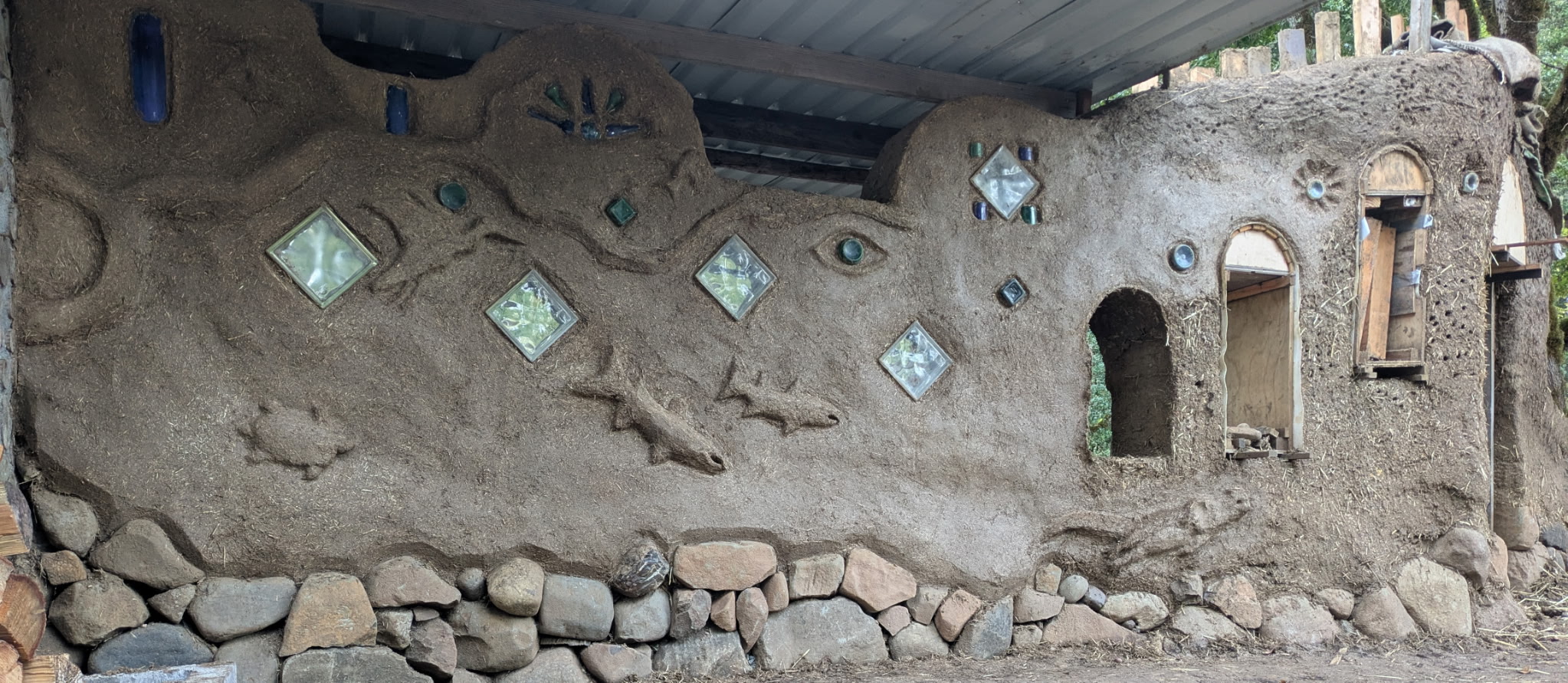
Earthen materials are accessible to the average person. And yet the poorest among us in many countries around the world, choose to use concrete cinder blocks and steel metal roofing. Materials like clay, sand and soil, straw, or bamboo are largely ignored. Or found materials like scrounged pieces of wood, broken chunks of concrete, used windows, or bottles – these are the recurring ubiquitous materials that anyone can use to make virtually anything and are completely free or very low cost to obtain.
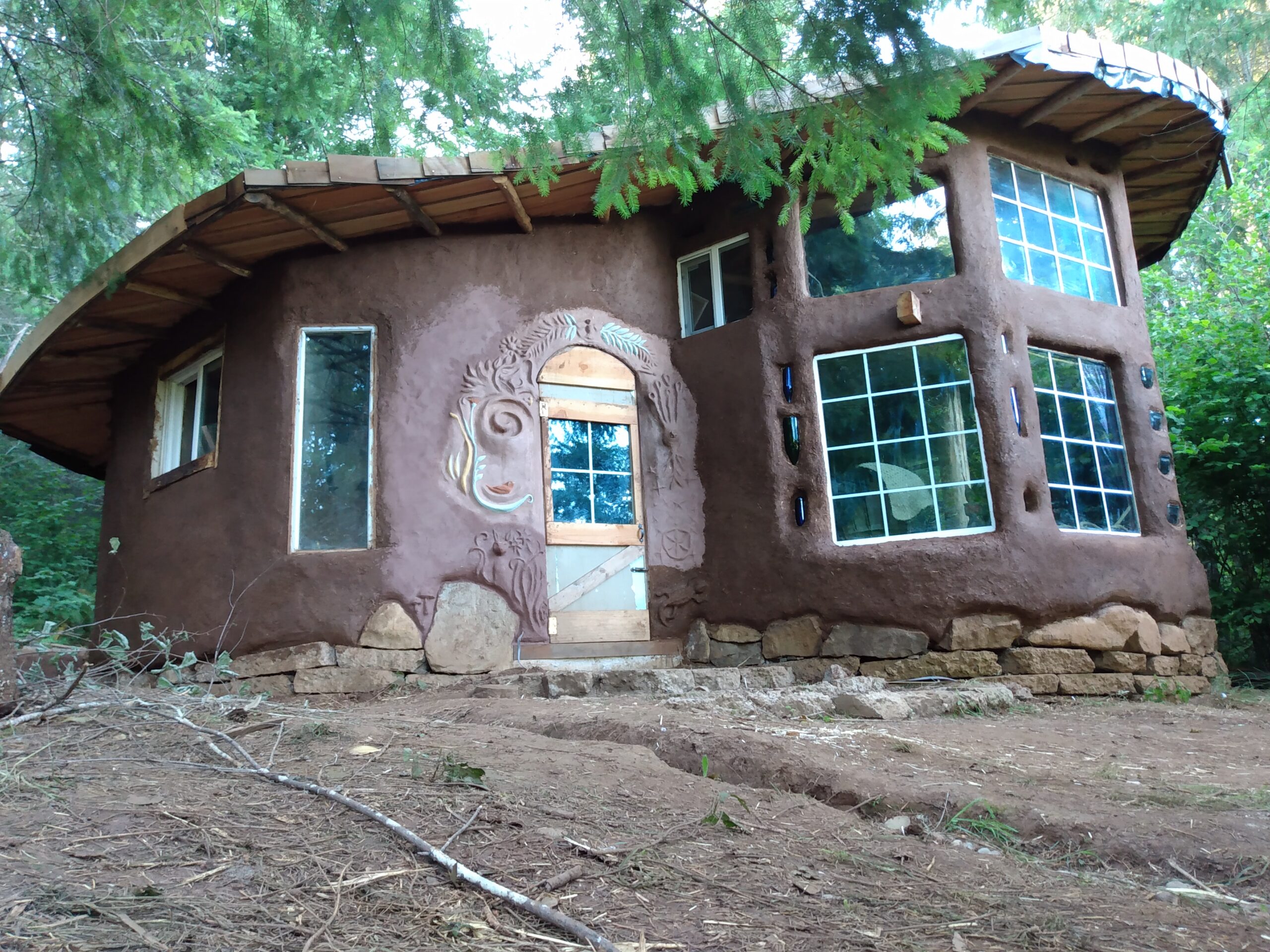
I’ve focused over the last 18 years mostly on building cottages that house people. And teaching others what I’ve learned. But also in addition, handy technology like rocket stoves or pizza ovens can be created by applying simple building technique as well.
With earthen materials, maintenance and making repairs is usually a simple matter. Whether it’s replastering a house or opening up a wall to install plumbing or making a new addition. These tasks are made easy because of the nature of earthen buildings. It’s not like concrete and rebar, where having specific tools and is specialized skills are necessary.
Not too long ago people would build their own homes. Maybe with the help of family and friends. Then slowly as time went on we hired out some specialty items to the local blacksmith like hinges or door handles. Then through the passage of time people wanted more things, so more space was needed. We started paying other people to build our homes. In order to pay outsiders for everything that we couldn’t provide for ourselves, farmers started growing a surplus. Everybody knew how to grow things. So the farmers had to grow more than what their family could eat and use. They could then buy the things that they couldn’t do for themselves.
Over time, we created things or services to sell in order to have others build our homes, provide our entertainment, give us our healthcare, and watch or teach our children. Soon it wasn’t enough to live on land anymore. We needed more than that, so we moved to cities and soon we were working jobs that gave us the money to drive to work to pay for the taxes, so we could borrow money from the banks to have the right to rent our home from the lenders who own the house that now requires us 30 or 40 or 50 years to pay off, working meaningless jobs that make us sick, tired, and worn out. Meanwhile, our social structures are falling apart because everything is so separated. In comes technology to help us but it inevitably causes more separation and problems and addictive behaviors.
Some people say they can’t afford the luxury of building their own home nowadays. “I don’t have the time”. “I’m holding it all together as it is”. But the real question seems to be: “Is what you’re currently doing working for you?”. How does what I do, or how I live, affect my health or the planet’s health? Do I have good relations with the people and the Earth around me?
And isn’t the question really, “How can I afford NOT to build a place of my own?
These realizations and questions started me on my journey into natural building 20 years ago. I have enjoyed learning and teaching people the skills that will make us all more resilient in the coming future unfolding before us. It’s only one piece of the puzzle however. We owe it to our children and the planet to change the way we think about things like housing, or food production, education, community, and work. I’d love to leave this place better than I found it. Help me with this monumental task by coming out to a workshop or a scheduled work party and start the transformation by registering for a class today. Hope to see you there.